.png)
If you're an adult child caring for aging parents from a distance, these 10 monthly questions help you stay ahead of health, safety, and emotional wellbeing - before small problems become serious ones.

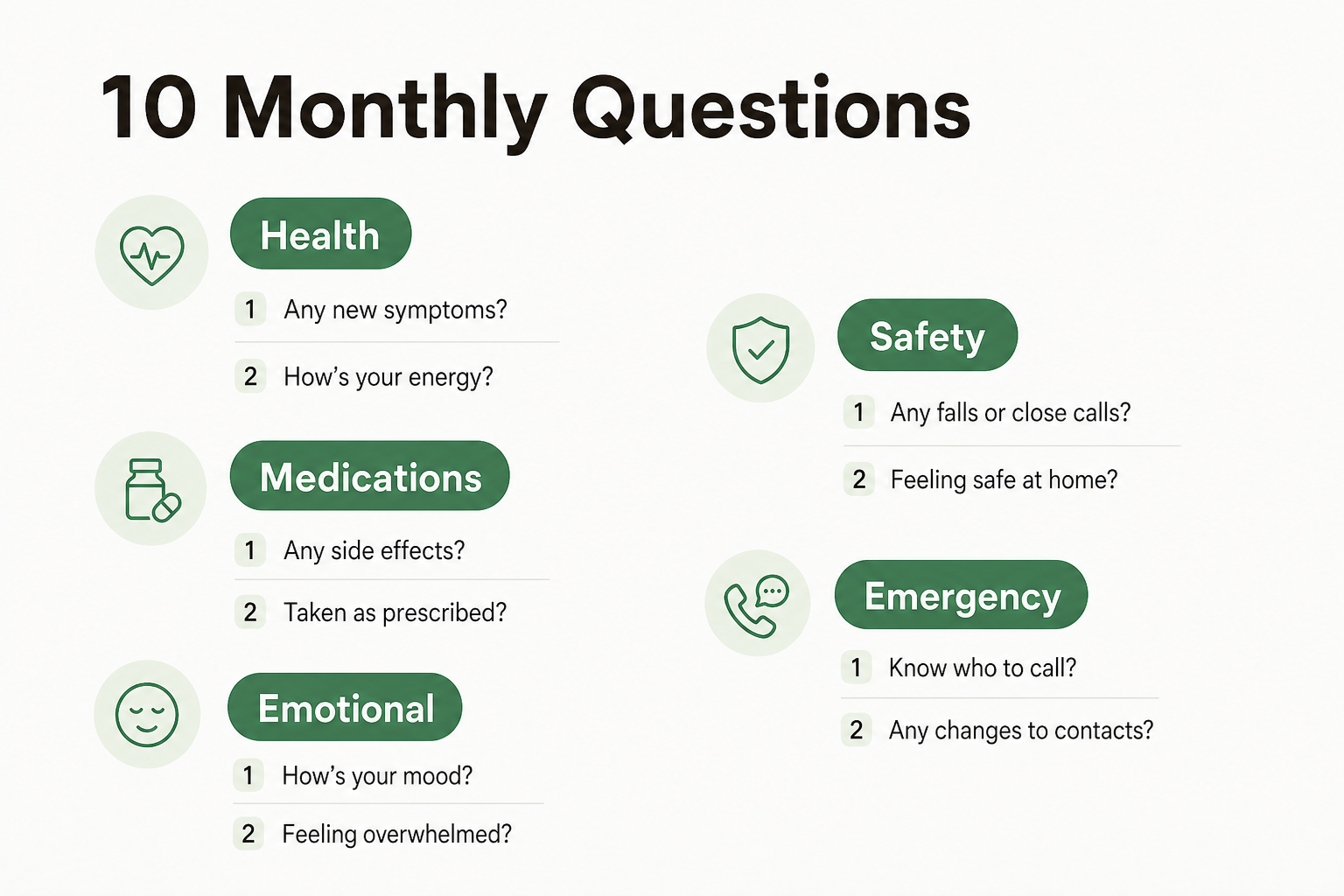
Most adult children check in on aging parents out of love - but without a structure, it's easy to miss what actually matters. These 10 questions cover the five areas where problems most often start: physical health, safety at home, medications, emotional wellbeing, and emergency preparedness.
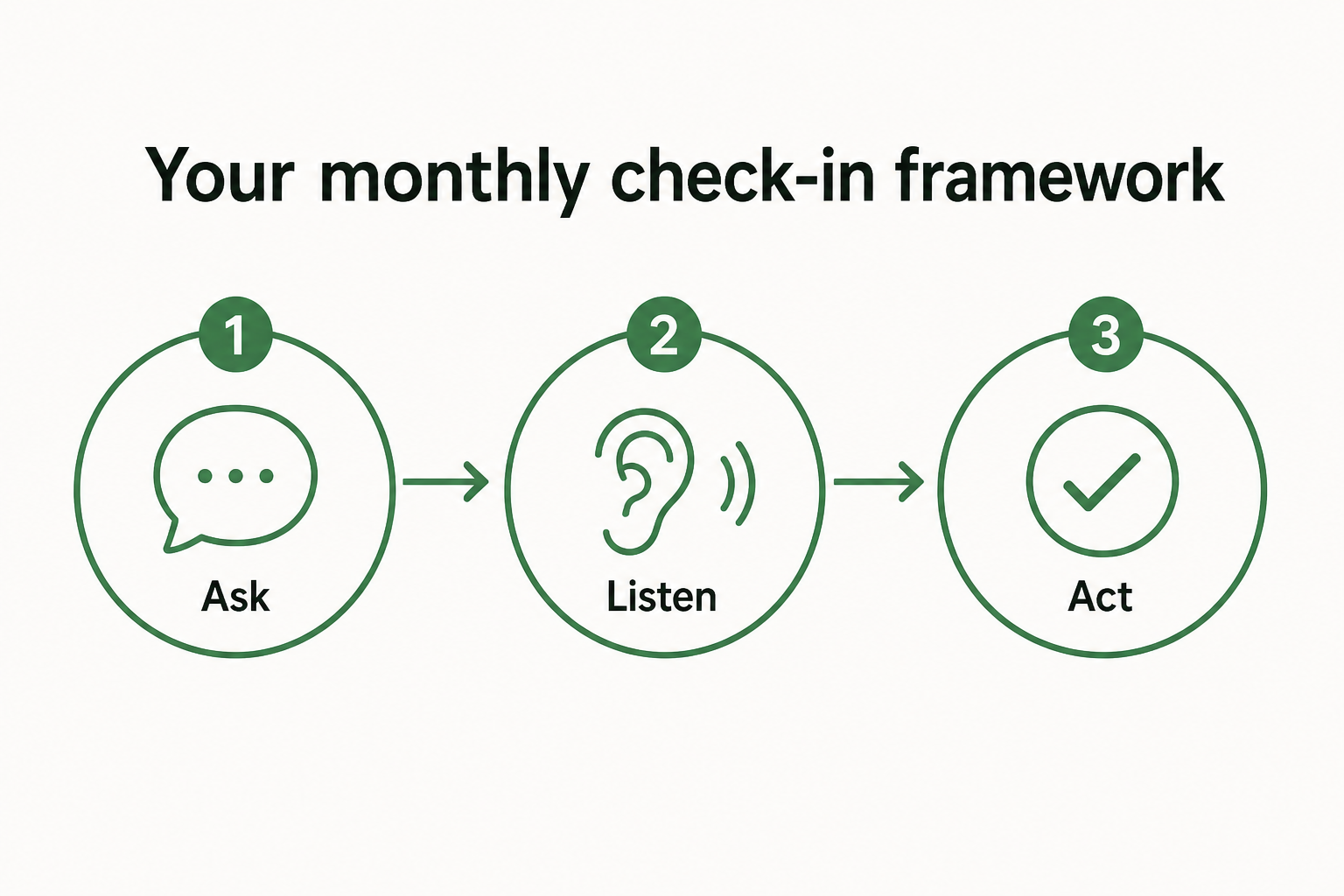
Ask them every month, listen for what changes, and you'll catch most issues before they become emergencies. If you're living far from your parents, Yodda fills the day-to-day gap with trained professionals who monitor exactly this - so you always know what's happening, even when you can't be there.
There's a particular kind of worry that adult children carry - the kind that doesn't announce itself. It's the moment you hang up a call with your parents and realize you spent 20 minutes talking about the neighbours' grandchildren and forgot to ask whether they're eating properly. Or the visit where everything seemed fine, until you noticed three weeks of unopened mail by the door.
The problem isn't that you don't care. It's that caring from a distance, without a structure, means the important things get skipped. Not out of neglect. Out of how conversations naturally go - toward the comfortable and away from the difficult.
A monthly set of questions - asked consistently, listened to carefully - is one of the most practical things you can do as a caregiver. Not to interrogate your parents, but to stay genuinely informed. What follows are 10 questions that cover the five areas where problems in older adults most commonly begin.
Health And Nutrtion.
1. How have you been sleeping this week?
Sleep is one of the earliest indicators of something going wrong - and one of the most commonly dismissed. According to the National Institute on Aging, insomnia affects the majority of adults aged 60 and older, yet most families chalk it up to "just getting older." It usually isn't.
Poor sleep in older adults is frequently caused by treatable factors: pain, medication side effects, anxiety, or an undiagnosed condition like sleep apnea. A pattern of two or more weeks of poor sleep - trouble falling asleep, waking frequently, waking too early - deserves a doctor's visit, not reassurance. If your parent tells you they're sleeping fine but seem exhausted or irritable, follow up with the specifics.
2. Are you eating well and staying hydrated?
Weight loss is one of the 12 warning signs that a parent may need more support at home. But the conversation doesn't need to start there. Ask what they've been eating, whether they're cooking, whether food still tastes good to them. Appetite changes, difficulty standing at the stove, and reduced interest in meals are all early signals worth tracking.
Dehydration is a particular risk in older adults - they often feel thirst less acutely than younger people and may reduce fluid intake without realizing it. Ask specifically, because this is a question most parents won't raise themselves.
Medications.
3. Are you taking all your medications on time?
Medication mismanagement is one of the leading causes of preventable hospitalization in older adults. The World Health Organization estimates that medication errors cause approximately 1.3 million injuries annually in the United States alone - and the problem is at least as significant in India, where many elderly patients manage multiple prescriptions across different doctors without centralized coordination.
Ask this question concretely: "Did you take your blood pressure medication this morning?" is more useful than "Are you keeping up with your medicines?" If there's confusion about dosages, missed doses, or interactions, that's a conversation to have with their doctor - and a reason to consider a care support system that includes daily medication checks.
Physical safety.
4. Have you had any falls, stumbles, or near-misses?
Falls are the leading cause of injury-related death among adults over 65, according to the WHO. And yet, many parents will not mention a fall unless directly asked - because admitting it feels like handing you the argument that they need more help.
The phrase "near-misses" matters here. Many older adults compensate for balance or vision changes without falling - they just start holding walls, avoiding the bathroom at night, or gripping furniture. These compensating behaviours are worth knowing about. A fall that doesn't cause injury this month may cause one that does next month.
5. Is the home still feeling safe and manageable?
This is a broader question than it sounds. What you're really asking: Are there repairs that aren't getting done? Has a rug that was always fine started feeling dangerous? Is the bathroom manageable? Has something changed about how they move through the house?
You're not asking whether the house is tidy. You're asking whether the environment has kept pace with how your parent is moving through it now - not two years ago. The answer to this question changes gradually, which is exactly why it's easy to miss.
Medical.
6. Do you have any doctor appointments coming up - or has anything new come up health-wise?
Many older adults manage multiple specialists: a cardiologist, an orthopedic, a general physician, perhaps a neurologist. Managing multiple doctors for aging parents is one of the hardest parts of remote caregiving - appointments get missed, referrals get lost between visits, and test results don't get communicated across doctors.
Ask specifically: what appointments are coming up, who they're with, and whether there's any follow-up from the last visit that hasn't happened yet. If your parent can't easily answer these questions, that itself is information - and it may be time to put a coordinator in place.
Emotional wellbeing.
7. How are you feeling - not just physically, but emotionally?
This is the question most families skip, and the one that often carries the most important signal. Loneliness among older adults is a significant public health issue in India - particularly for those whose children have moved to other cities or abroad. Depression in older adults often presents differently than in younger people: as fatigue, withdrawal, irritability, or a sudden loss of interest in things they previously enjoyed.
Ask directly, and then give them time to answer. Many older parents will redirect toward the physical ("my back has been bothering me") because it feels safer. Gently stay with the emotional question. "I know, but how are you doing inside?" can open a conversation that wouldn't otherwise happen.
8. Who have you spent time with this week?
Social isolation accelerates cognitive and physical decline in older adults - the evidence on this is well-established across multiple longitudinal studies. This question gives you a picture of your parent's world beyond the home. Have they seen friends? Attended their community group, religious gathering, or regular activity? Or have they been mostly home, mostly alone?
A pattern of withdrawal - even if your parent says they prefer it - is worth paying attention to. What changed? When did it start? Is it physical (mobility, pain) or emotional (grief, anxiety)?
Financial and emergency.
9. Have your bills and daily needs been taken care of?
Financial confusion - missed bills, unusual payments, difficulty managing accounts - is an early marker of cognitive decline in older adults. It also creates real, immediate problems: utilities cut off, insurance lapsed, rent overdue. Ask whether bills are current, whether there have been any confusing calls or letters, and whether they've been approached by anyone asking for money (elder financial fraud is a serious and growing problem in India).
This doesn't have to be a heavy conversation. "Is everything sorted with bills this month?" is enough of an opening.
10. If something happened right now, do you know who to call and what to do?
This is the question that separates a family that's hoping things will be okay from one that's actually prepared. Does your parent have a clear, accessible list of contacts - family members, neighbours, their doctor, a care service? Do they know how to reach help at 2 am if something goes wrong? Is their phone charged? Is there a working emergency contact system in place?
For many NRI families, this question exposes a genuine gap: there is no reliable, immediate on-ground support for the moment when it's actually needed. That gap is worth closing before it matters.
Making these conversations easier.
The hardest part of asking these questions isn't knowing them - it's asking them in a way that doesn't feel like an audit. Most parents resist being monitored, especially when they're trying to preserve their sense of independence.
A few things that help:
Frame it as curiosity, not concern. "I was reading something about how sleep changes as we get older and thought of you" opens more than "Are you sleeping okay?"
Ask the same questions every month. Consistency lets you track changes over time. A single data point doesn't tell you much; a pattern does.
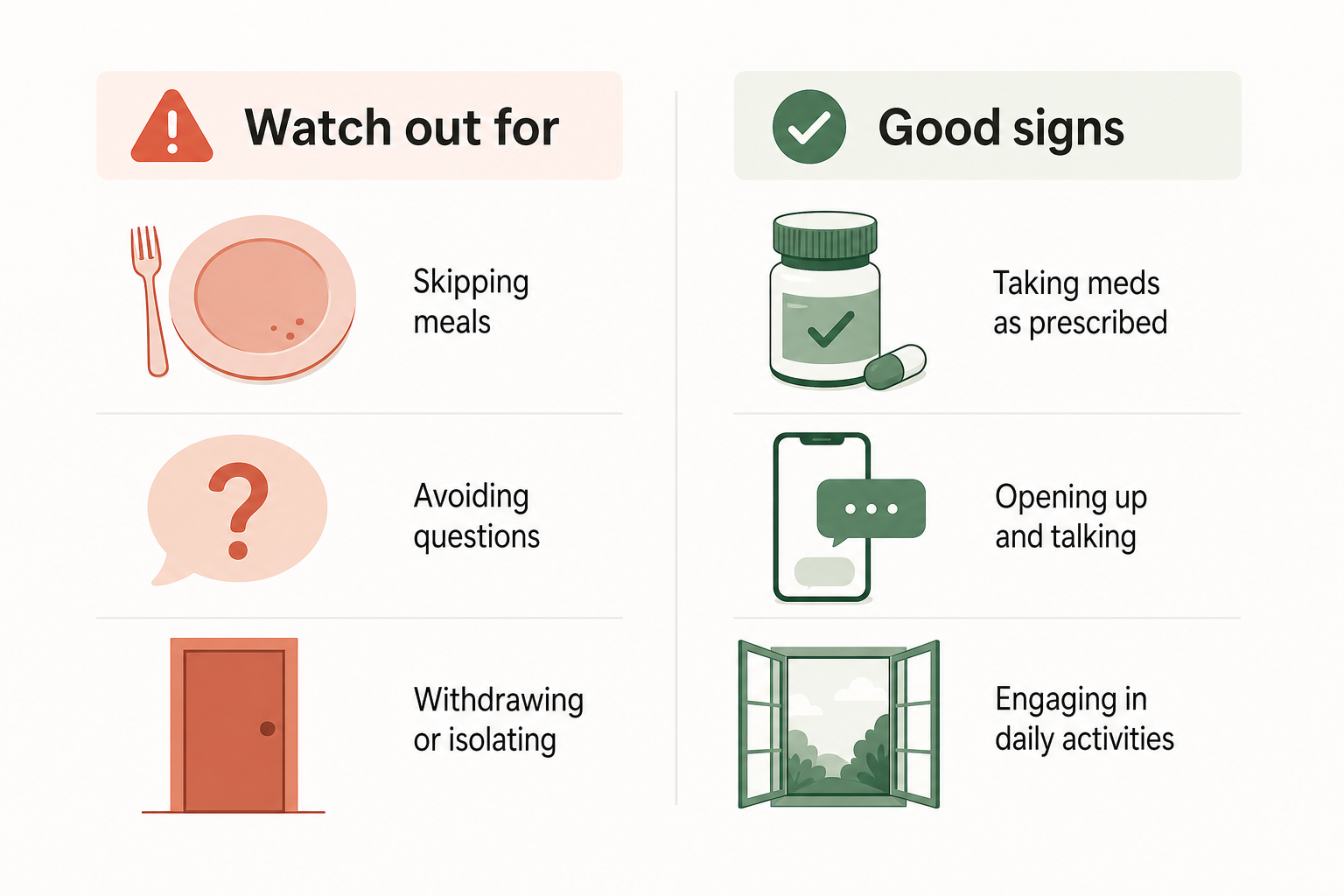
Listen for what changes, not just what's wrong. Your parent might say everything is fine. But if their answers this month are shorter, more vague, or more defensive than last month, that's worth noticing.
Be specific rather than general. "Did you have dinner tonight?" is more useful than "Are you eating well?"
Try Yodda Care.
Yodda was built for exactly this situation - families who want to be active caregivers but can't always be physically present. Yodda's Primary Care Representatives (trained ex-Indian Army veterans, certified to ISO 9001:2015 and ISO 22320:2018 standards) carry out daily wellness check-ins, track patterns across health, safety, and emotional wellbeing, and flag concerns before they escalate. The Yodda Care App and smartwatch mean your parent can reach help in seconds, at any hour.
For families where the 10 questions above surface a gap - no reliable emergency contact, no daily monitoring, no healthcare coordination - Yodda closes that gap. Plans start at ₹9,999/month, with customized options for parents managing chronic illness.
Talk to Yodda's team - there's no pressure, and it's worth knowing what's possible.
Frequently Asked Questions.
How often should I check in with my aging parents?
A meaningful check-in once a week works well for most families, but a deeper monthly conversation - covering the 10 questions in this post - helps you spot patterns before they become problems. Yodda's Primary Care Representatives do daily wellness checks as part of their service, which removes the pressure of relying solely on scheduled calls.
What if my parent doesn't want to answer personal questions?
Many seniors resist questions about health or finances because they feel it threatens their independence. Framing questions as curiosity rather than concern helps - 'I was reading about sleep in older adults and thought of you' lands better than 'Are you sleeping okay?' A trusted on-ground professional, like Yodda's care team, can often pick up on what parents won't say directly to their children.
What are the biggest warning signs I should watch for in my aging parent?
Unexplained weight loss, frequent falls, missed medications, confusion about finances, withdrawal from social activities, and poor personal hygiene are among the 12 warning signs that deserve immediate attention. Any sudden change - even in mood or appetite - is worth a closer look.
My parent lives far from me. How do I make sure they're safe day-to-day?
Regular structured conversations (using a checklist like this one) combined with an on-ground professional support system is the most effective approach. Yodda provides 24/7 emergency response, daily wellness monitoring, and healthcare coordination specifically designed for families living away from aging parents.
Can these questions be used for a parent with a chronic illness like diabetes or dementia?
Yes - in fact, they're even more important for parents managing chronic conditions, where small changes can signal a much larger problem. You'd add condition-specific questions (e.g. blood sugar readings, memory check-ins), and having a professional care team monitor between your conversations becomes especially valuable. Yodda offers customized plans for parents with cancer, dementia, kidney failure, and other chronic illnesses.
Comments
Post a Comment