- Get link
- X
- Other Apps

1. When strong parents start to slow down.
Most of us grow up thinking: one day our parents will leave us. We imagine that goodbye will come with a funeral, tears, and silence at home. But many Indian children today are learning a different, quieter kind of goodbye — the one where parents are still alive, but their bodies and minds slowly become weak.
It’s the moment you first notice your father forgetting simple words, your mother tripping on the stairs, or your parents suddenly afraid to go out alone. That’s not death, but it feels like a slow heartbreak. This blog is about that feeling — and how we, as children, can still stand by them, even if we live far away.
2. Why seeing parents weaken hurts so much?
Ageing is natural, but it hits our hearts differently when it’s our parents. They raised us, cooked for us, scolded us, and stayed awake worrying about our exams and health. Now, suddenly, they need help with what they used to do every day.
For many Indians, this shift is painful because:
Our culture teaches us to respect elders and treat them as strong pillars of the family.
Seeing them weak or confused feels like the world is upside down.
We often feel guilty if we can’t stay home all the time to care for them.
A lot of us also feel helpless. We don’t know basics like what medicines they are taking, how to prevent falls, or how to handle emergencies. That mixture of love, helplessness, and guilt makes this “slow goodbye” so heavy.
3. Simple numbers that show why this matters.
Here are some easy‑to‑understand facts that help explain why elder care is becoming so important in India:
More older people every year: In India, the number of people aged 60 and above has been rising fast. According to UN and Indian government data, the share of elderly people is expected to grow from about 10–11% today to around 20% by 2050.
Big numbers in human terms: Today, India already has over 100 million elderly people (above 60), and this number keeps growing by millions every year.
Children living away: Many young Indians move to cities or abroad for jobs, leaving their parents in smaller towns or at home alone. This means more elderly parents are living without constant family support.
More health risks with age: Older adults are more likely to fall, have heart problems, diabetes, or memory issues. A simple fall can become serious if help does not reach within minutes.
These numbers are not just figures on a chart; they are real homes, real families, and real children who worry every day.
4. What most parents quietly go through?
Let’s talk about what many parents actually experience every day, without anyone really noticing:
Fear of falling: Stairs, wet floors, or even getting up at night can feel dangerous. One small slip can lead to a fracture or long hospital stay.
Forgetting medicines: An elderly person might forget whether they already took their tablet, or when the next dose is. This can make serious health problems worse.
Loneliness: Children leave for work; grandchildren grow up and move out. The house becomes quiet. Many parents feel lonely but never say it out loud.
Confusion and memory loss: Some parents start forgetting names, dates, or even which medicines are important. This can be scary for them and for us.
In India, where joint families are breaking into nuclear ones, these problems are becoming more common. Parents are living longer, but they are not always living better.
5. How technology can be a child’s “proxy hand”?
This is where technology is slowly changing things. In India, many companies are starting to offer tech‑enabled elder care services, and one example is Yodda.care (www.yodda.care).
Yodda is a technology‑based elder care company that helps children care for their parents from anywhere in the world. It was started in Pune in 2021 and now works in cities like Pune, Mumbai, Thane, Navi Mumbai, Hyderabad, Bangalore, Chennai, and Delhi‑NCR.
What Yodda actually does?
Yodda offers three main types of support for Indian families:
24/7 emergency management.
If a parent falls, feels chest pain, or has any emergency, they can press a one‑touch emergency button on a phone, smartwatch, or GPS pendant.
The alert goes to Yodda’s Emergency Command Centre, where trained staff respond quickly and can call an ambulance or family.
This is especially useful when children are in another city or another country.
Healthcare and daily assistance.
Yodda helps with regular check‑ups, doctor visits, and medicine reminders.
Professional caregivers can help with daily tasks like bathing, walking support, and light housework.
They also help coordinate with hospitals and doctors if parents need longer care.
Convenience and “home manager” services.
They can help with grocery shopping, home maintenance, and small errands.
This keeps the house safe and comfortable and reduces stress for parents.
Yodda’s system connects children, parents, and caregivers on one simple platform. Even if you are in the US or Dubai, you can know when your parent took their medicine, when a caregiver visited, or whether there was any emergency.
6. Making tech easy for Indian parents.
Many Indian parents are not comfortable with smartphones and apps. Yodda understands this, so they use very simple tools:
A big‑button emergency device that only needs one press.
Smartwatches or pendants with a clear SOS button.
Voice‑assisted or simple‑screen apps that children can manage from their own phones.
This is important: technology should not replace love, but it can support it. A fall detector, a medicine reminder, or a panic button will never give the same comfort as a child’s hug. But when the child is far away, these tools can help make the goodbye feel a little less painful.
7. Small, powerful things you can do every day.
Here are some simple, practical steps that any Indian child can take, even if they are busy with studies or jobs:
Talk daily, even for 5 minutes.
Pick up the phone or do a video call. Ask how they slept, ate, and felt that day.
Small talks reduce loneliness and let you notice changes early.
Know their medicines and doctors.
Keep a simple list of all medicines, doses, and doctor names.
Ask your parents to share this with a trusted neighbor or caregiver too.
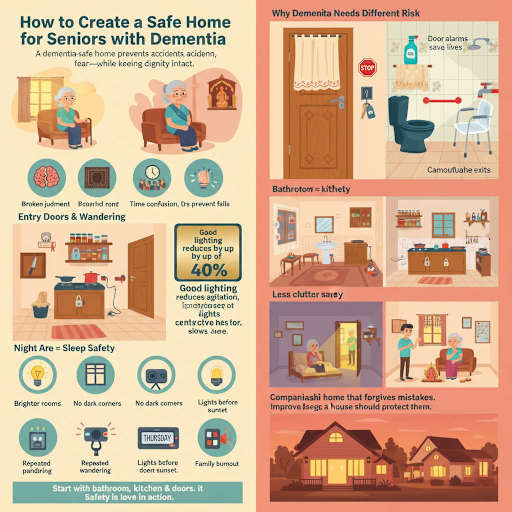
Make the house safer.
Fix loose wires, put non‑slip mats in the bathroom, and make sure the stairs are safe.
A safer home means fewer falls and fewer emergencies.
Plan for emergencies.
Save emergency numbers (police, hospital, neighbor, local doctor) on big paper near the phone.
If you use a service like Yodda, show your parents how to press the emergency button and make sure it is always charged.
Visit when you can.
Physical presence matters a lot. Even if you work far away, try to visit once a few months.
If you can’t travel, ask an aunt, uncle, or family friend to visit and spend time with them.
Listen to their fears.
Sometimes parents don’t talk about their weakness because they don’t want to “burden” their children.
Ask gently: “Are you feeling afraid or confused about anything?” and promise you will not ignore them.
8. Turning pain into a new kind of love.
“The hardest goodbye isn’t death — it’s watching parents grow fragile.” That sentence is true, but it doesn’t have to end with only sadness.
It can also be the moment when we grow up as children.
From taking care to being there.
From feeling helpless to taking small, smart steps.
From fearing age to respecting it with knowledge and simple tools.
In India, where we say “Maa, Papa, Guru, Devata” (mother, father, teacher, god), we can still show that respect not just through rituals, but through real care, simple technology, and everyday presence.
9. One small ask for you.
If you read this blog and found it useful, think of one thing you can do for your parents today:
Call them.
Check their medicines.
Or just say, “I’m here for you.”
If you live far away and want a tech‑help option, you can explore services like Yodda.care (www.yodda.care) and see how they can stand by your parents as a “proxy child” when you cannot physically be there.
Because the hardest goodbye can be a little softer, if we keep our love, our attention, and a simple SOS button, always ready.
Comments
Post a Comment